There it is - America's most dangerous jobs in 2007:
Also note that police officers' most common cause of death on the job are car accidents, not confrontation with criminals. Police officers' rate of death by homicide - about 8 per 100,000 - is just slightly above the rate for the general population (6.2 per 100,000), and is lower than the rate for general male population (10.0 per 100,000) or male population ages 20-59 (about 11 per 100,000).
Showing posts with label risk. Show all posts
Showing posts with label risk. Show all posts

Sep 30, 2008
Voters deserve better actuaries
Bragg is promoting his actuarial analysis of McCain and Obama again:
Let's start from the average mortality, given only the candidates' age and sex. McCain is 72 years and 32 days old and he will be 80 years and 144 days old on January 20, 2017. Using Social Security's life tables, his probability of dying before the end of his second term is 32.2%. Barack Obama is 47 years and 57 days old; his probability of dying by the same day, which in his case is age 55 years and 169 days, is 4.3%.
(Non-geeks may skip this paragraph: I used the 1940 cohort table for McCain and 1960 cohort table for Obama. Those are the closest to their birth years. Those choices favor McCain by the amount of mortality improvement from his 1936 cohort to the 1940 cohort. The difference is hardly negligible: using the 1930 cohort, we'd get 34.7% for the same ages, and linear interpolation yields approximately 33.2%, so the result I used is biased in McCain's favor by about 1 percentage point. Similarly, using 1960 cohort mortality for Obama introduces a slight - although almost negligible in this case - bias against Obama. One further geek note: I derived all survival probabilities by linear interpolation between nearest integer-year ages. That is more than accurate enough for the purpose of this analysis.)
Of course, there is more information available about the candidates, and Bragg lists some factors used:
That is hardly an unbiased account, and the statement that "McCain allowed reporters to review eight years of medical records" is, at best, barely true. In any case, the factors mentioned in the article should be worse news for McCain than for Obama.
Let's start with smoking. It is true that Obama wouldn't qualify for non-smoker rates if he applied for a life insurance policy today, but life insurance underwriting imposes rather crude discrete categories by necessity. (Verification is costly and the potential for cheating is high; for example, someone who smokes two packs a day could claim to smoke one pack a week.) This individualized analysis can do much better than that. Obama's quitting has not been entirely successful, but he is clearly closer to a former smoker than to a current one. McCain stopped smoking years ago, but he used to smoke two packs a day for 25 years. So they have a similar smoking history and quit at a similar age. By itself, this factor would make each of them more likely to die than an average man of their age. The effect is probably greater for Obama mainly because fewer men of his age are smokers, so average mortality for his cohort is based on a higher percentage of non-smokers. I would be curious to see what factors Bragg applied to account for smoking history.
(Another note for wonks: Insurers generally charge smokers double or even higher rates than nonsmokers, and that is soundly based on experience, but those factors apply to a baseline of the insured population, i.e., to the people who have passed other underwriting hurdles. For example, by the Society of Actuaries' 90-95 Basic Select tables, a male smoker of Obama's age would have about 3.5% chance of dying in the next 8 years, which is better than the average from the Social Security tables. Similarly, a smoker of McCain's age would have 23% chance of dying in the next 8 years, again better than in the SSA tables. Another thing to keep in mind is that, in insurance underwriting, smoking also serves as a proxy to other risky behavior, which means that not all of the excess mortality of smokers is caused by smoking.)
The candidates' fitness balances their smoking history. Both candidates seem to have healthy hearts, and Obama's pulse and blood pressure cited by Bragg are impressive. Obama is thin and McCain's weight is normal. They both seem significantly more fit than average men of their respective ages. Fitness-related mortality patterns are far less well known than smoking-related ones, but my guess would be that both candidates make up in fitness about as much as they lose from smoking history. Additionally, both are married and have (as far as we know) healthy spouses, which also improves their longevity prospects. Not to mention that both have access to best available health care.
So far, very similar adjustments to age/sex baseline apply to both candidates, but the rest is all bad news for McCain. Melanoma is a serious type of cancer, prone to metastasizing that is hard to detect and treat. It is true that McCain has been free of symptoms for 8 years and that it improves his prognosis, but the fact that he's had 4 episodes of melanoma, and that the last one was over 2 mm deep, raise additional concerns. For lesions like his last one, 5-year survival rate is 63-79% and 10-year 51-64%. He has survived for 8 years, so the greatest risk is behind him, but he is not out of the woods:
Another issue for McCain is the long-term effects of maltreatment by the Vietcong. Five and a half years of injuries, torture and malnutrition certainly have health consequences. Quantifying the effect is difficult, but that's not a good reason to ignore it altogether.
In summary, there is little reason to think that Obama's probability of dying in the next 8 years exceeds that of an average man of his age - 4.3 percent. In fact, it is probably less than 3.5 percent, the number based on life insurance policy experience. On the other hand, I don't see how McCain's probability of dying in the same period would be much less than one-third. In other words, McCain is at least 9 times as likely to die in office as Obama. Bragg tells us it is not quite 4.5 times. Unless he publishes more details about the calculation and the assumptions, I can't see how his results could be justified.
UPDATE: It is probably wrong to focus on survival to the end of second term. Incumbency is an advantage in an election, but we don't elect a President for 8 years, and we would (hopefully) have updated health information before the next election. Going back to the baseline (Social Security tables), a man of McCain's age has 15.4% chance of dying before January 20, 2013, and a man of Obama's age has 2.0% chance of dying in the same period. By the way, the shorter the period we look at, the more significant a factor McCain's cancer is, because the probability of recurrence goes down the longer he's already survived.
McCain would be the oldest president to begin a first term in office. By the end of a second term, Jan. 20, 2017, he would have a 24.44 percent chance of dying, compared with 5.76 percent for Obama, the firm estimates.As far as I can tell, those numbers seriously understate the difference in the candidates' respective longevity prospects.
Let's start from the average mortality, given only the candidates' age and sex. McCain is 72 years and 32 days old and he will be 80 years and 144 days old on January 20, 2017. Using Social Security's life tables, his probability of dying before the end of his second term is 32.2%. Barack Obama is 47 years and 57 days old; his probability of dying by the same day, which in his case is age 55 years and 169 days, is 4.3%.
(Non-geeks may skip this paragraph: I used the 1940 cohort table for McCain and 1960 cohort table for Obama. Those are the closest to their birth years. Those choices favor McCain by the amount of mortality improvement from his 1936 cohort to the 1940 cohort. The difference is hardly negligible: using the 1930 cohort, we'd get 34.7% for the same ages, and linear interpolation yields approximately 33.2%, so the result I used is biased in McCain's favor by about 1 percentage point. Similarly, using 1960 cohort mortality for Obama introduces a slight - although almost negligible in this case - bias against Obama. One further geek note: I derived all survival probabilities by linear interpolation between nearest integer-year ages. That is more than accurate enough for the purpose of this analysis.)
Of course, there is more information available about the candidates, and Bragg lists some factors used:
He classified the Democrat as a smoker with minor upper respiratory problems, probably linked to his smoking. Obama announced in February that he was trying to quit smoking again, with the aid of nicotine gum.
"We don't consider you a nonsmoker until you stay quit for 12 months," said Brooks.
In the spring, the Obama campaign released a letter from the candidate's doctor declaring him to be in excellent health. He had very good cholesterol levels, his EKG was normal, his pulse was 60 beats per minute, and his blood pressure was an outstanding 90 over 60. Obama also exercises regularly.
But Obama has a family history of cancer. His mother died of ovarian cancer and his maternal grandfather died of prostate cancer. Obama's PSA screening test for prostate cancer showed no sign of abnormalities.
For the Republican, Brooks took into account a history of skin cancer, degenerative arthritis from his Vietnam war injuries, moderately high cholesterol, mild vertigo and that McCain is a former smoker who quit in 1980.
McCain allowed reporters to review eight years of medical records, more than 1,000 pages. They show that he is cancer-free, has a strong heart and is generally in good health. As a three-time melanoma survivor, his biggest health worry is a recurrence of that cancer. But he is closely watched by his dermatologist, and any future melanoma should be caught in time to be treated successfully. McCain maintains a healthy weight and blood pressure, and takes medication for his cholesterol.
That is hardly an unbiased account, and the statement that "McCain allowed reporters to review eight years of medical records" is, at best, barely true. In any case, the factors mentioned in the article should be worse news for McCain than for Obama.
Let's start with smoking. It is true that Obama wouldn't qualify for non-smoker rates if he applied for a life insurance policy today, but life insurance underwriting imposes rather crude discrete categories by necessity. (Verification is costly and the potential for cheating is high; for example, someone who smokes two packs a day could claim to smoke one pack a week.) This individualized analysis can do much better than that. Obama's quitting has not been entirely successful, but he is clearly closer to a former smoker than to a current one. McCain stopped smoking years ago, but he used to smoke two packs a day for 25 years. So they have a similar smoking history and quit at a similar age. By itself, this factor would make each of them more likely to die than an average man of their age. The effect is probably greater for Obama mainly because fewer men of his age are smokers, so average mortality for his cohort is based on a higher percentage of non-smokers. I would be curious to see what factors Bragg applied to account for smoking history.
(Another note for wonks: Insurers generally charge smokers double or even higher rates than nonsmokers, and that is soundly based on experience, but those factors apply to a baseline of the insured population, i.e., to the people who have passed other underwriting hurdles. For example, by the Society of Actuaries' 90-95 Basic Select tables, a male smoker of Obama's age would have about 3.5% chance of dying in the next 8 years, which is better than the average from the Social Security tables. Similarly, a smoker of McCain's age would have 23% chance of dying in the next 8 years, again better than in the SSA tables. Another thing to keep in mind is that, in insurance underwriting, smoking also serves as a proxy to other risky behavior, which means that not all of the excess mortality of smokers is caused by smoking.)
The candidates' fitness balances their smoking history. Both candidates seem to have healthy hearts, and Obama's pulse and blood pressure cited by Bragg are impressive. Obama is thin and McCain's weight is normal. They both seem significantly more fit than average men of their respective ages. Fitness-related mortality patterns are far less well known than smoking-related ones, but my guess would be that both candidates make up in fitness about as much as they lose from smoking history. Additionally, both are married and have (as far as we know) healthy spouses, which also improves their longevity prospects. Not to mention that both have access to best available health care.
So far, very similar adjustments to age/sex baseline apply to both candidates, but the rest is all bad news for McCain. Melanoma is a serious type of cancer, prone to metastasizing that is hard to detect and treat. It is true that McCain has been free of symptoms for 8 years and that it improves his prognosis, but the fact that he's had 4 episodes of melanoma, and that the last one was over 2 mm deep, raise additional concerns. For lesions like his last one, 5-year survival rate is 63-79% and 10-year 51-64%. He has survived for 8 years, so the greatest risk is behind him, but he is not out of the woods:
“With melanoma, a patient is never completely clear,” said Dr. Shapiro, the N.Y.U. expert.Precise estimates aren't available, but it is hard to see how McCain's chance of dying from this one cause alone would be less than 10% over the next 8 years.
If melanomas do recur, standard treatment options are limited for many to surgery and a difficult form of chemotherapy. The chances of long-term survival diminish.
Another issue for McCain is the long-term effects of maltreatment by the Vietcong. Five and a half years of injuries, torture and malnutrition certainly have health consequences. Quantifying the effect is difficult, but that's not a good reason to ignore it altogether.
In summary, there is little reason to think that Obama's probability of dying in the next 8 years exceeds that of an average man of his age - 4.3 percent. In fact, it is probably less than 3.5 percent, the number based on life insurance policy experience. On the other hand, I don't see how McCain's probability of dying in the same period would be much less than one-third. In other words, McCain is at least 9 times as likely to die in office as Obama. Bragg tells us it is not quite 4.5 times. Unless he publishes more details about the calculation and the assumptions, I can't see how his results could be justified.
UPDATE: It is probably wrong to focus on survival to the end of second term. Incumbency is an advantage in an election, but we don't elect a President for 8 years, and we would (hopefully) have updated health information before the next election. Going back to the baseline (Social Security tables), a man of McCain's age has 15.4% chance of dying before January 20, 2013, and a man of Obama's age has 2.0% chance of dying in the same period. By the way, the shorter the period we look at, the more significant a factor McCain's cancer is, because the probability of recurrence goes down the longer he's already survived.
Aug 6, 2008
Presidential terms and actuarial errors
Atlanta Journal-Constitution reports that the actuarial firm John M. Bragg & Associates has estimated the healthy life expectancy - average remaining life free of Alzheimer's or other impairments requiring an assisted living facility - for John McCain and Barack Obama. Bragg gives McCain a health expectancy of 8.4 years, and Obama 21.9 years, and offers the following conclusion:
“Either candidate can be expected to serve two full terms, without age or health being an issue,” said John M. Bragg, the firm chairman.
John Aravosis points out that Bragg's numbers don't add up:
The actuarial (sic) says McCain has 8.4 "healthy" years left. He mistakenly drew the conclusion that McCain would therefore be healthy through two terms in office, thinking that eight years from now is the end of McCain's term. That's incorrect. The end of the term is in 8 years 5.5 months from now. Statistically, that means McCain won't make it through two terms as a "healthy" president. By healthy, he means “the person does not require the care provided by an assisted living facility and is free of Alzheimer’s disease.”
By my back-of-the-envelope calculations, that means McCain wouldn't even be able to complete two full terms in office. His time runs out on December 30th or so of 2016, a good three weeks before the new president would be sworn in. So that means, statistically speaking, before the end of two terms, we should expect President McCain to have to be moved to a retirement home because he'll no longer be able to care for himself, and we should expect that he'll already be suffering from Alzheimer's.
Aravosis is correct in noting that 8.4 years from now does not give the new President (whoever it is) two full terms. His explanation of what that means is a little sloppy, but the end result is most likely correct. The issue is what it means that "we should expect" McCain (not) to be healthy and alive by the end of the two terms. I assume that Aravosis means "it is more likely than not", but that doesn't follow so simply from the published statistic.
Mathematical expectation is the theoretical mean, not median. What it means is the following: if we had a thousand men of the same age and other relevant characteristics as John McCain, we follow them all until they die and note how long each lives, and then we sum up all of their times from now until death, and divide the result by 1000 (the number of them), we will get something very close to 8 years, 146 days.
It does not mean that 500 of them will live longer than 8.4 years and the other 500 shorter. That would follow only if the remaining lifetime were distributed symmetrically, for example, if it followed the bell-shaped normal distribution. But that is not the case: all remaining lifetimes must be greater than zero, but there is no reason some of them couldn't be 30 years or more. The expectation (8.4 years) is obviously not in the middle of the range, so the distribution is skewed (asymmetric).
Now it turns out that, in most distributions of this kind (with a "tail" on the right), the median is less than the mean. If the median healthy survival is less than 8.4 years, it would mean that fewer than 500 of the initial 1000 "McCain clones" would have more than 8.4 years of healthy life - and, obviously, even fewer would have 8.46 or so years needed to complete two terms in office. So Aravosis made a correct statement, after all.
If Aravosis is correct, Bragg must be incorrect. It is not possible to say, based on Bragg's own numbers, that McCain "can be expected to serve two full terms, without age or health being an issue". Because the median is almost certainly lower than the mean, it would not be true even if the expected healthy life were somewhat longer, say 8.5 years, extending beyond two terms. It would still imply that McCain is more likely than not to die or become seriously impaired before the end of the second term.
But this error in arithmetic is not the most bothersome part of Bragg's statement. After all, if all the critique amounted to were nitpicking about chances being 49% rather than 51%, it would be rather academic. I see a far more serious problem in Bragg's choice of risk measure.
Suppose for a moment that Bragg's arithmetic was right, and that McCain could be expected, albeit barely so, to be alive and healthy on January 20, 2017. Suppose his chances are 55%. That's a generous "improvement" of Bragg's estimate, but it still means a 45% chance he would be dead or incapacitated. Would most people be comfortable with a president facing those odds? Would most people, upon hearing that number, characterize a potential McCain presidency as "without age or health being an issue"? I doubt that. From the risk management point of view, Bragg has cited an almost useless statistic.
John M. Bragg is not just any actuary. He was President of the Society of Actuaries. That, however, was a long time ago, when the US President was named Gerald Ford.
Aug 3, 2008
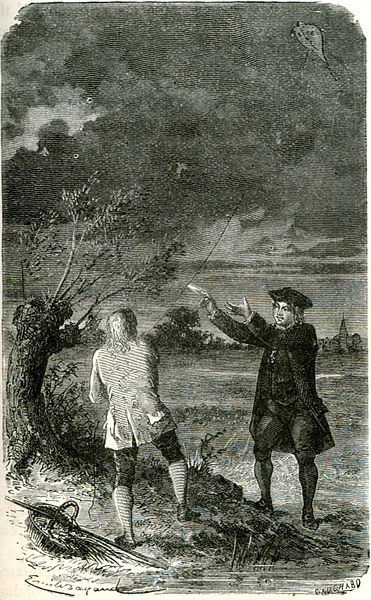
Swimming with Ben Franklin
I headed to the pool yesterday, in mostly sunny weather, but just when I got there, distant thunder could be heard. The lifeguard followed the standard procedure and ordered all the people out of the pool before I could get my toes wet. I didn't have time to stay and wait for half an hour or more, so I turned around and walked home, not getting the 20-30 minute swim I had hoped for.
I wonder whether this risk-averse policy of preventing lightning strikes in the pool makes sense. To answer that question, we need some quantitative measures of risk, not just an explanation why it is risky to be in water in or near a thunderstorm. Of course, being in water increases risk, but by how much? There are indications that expert advice tends to be more risk-averse than most people would be willing to follow. For example, the National Lightning Safety Institute says that cars are safe (because of their metal shell), but only if you
I wonder whether this risk-averse policy of preventing lightning strikes in the pool makes sense. To answer that question, we need some quantitative measures of risk, not just an explanation why it is risky to be in water in or near a thunderstorm. Of course, being in water increases risk, but by how much? There are indications that expert advice tends to be more risk-averse than most people would be willing to follow. For example, the National Lightning Safety Institute says that cars are safe (because of their metal shell), but only if you
close the windows, lean away from the door, put your hands in your lap, don't touch the steering wheel, ignition, gear shifter, or radio.
That means you shouldn't drive in a storm. But how realistic is that? Imagine the traffic coming to a standstill every time a thunderstorm is near. Similarly, if you are at home, you shouldn't take a shower or wash your hands during a storm, because plumbing is part of the house's conductive shield, and touching it - directly or through water - puts you at risk. But seriously, how many people have died or been injured by lightning while washing hands at home?
Numbers matter because foregoing unsafe actions is usually costly. If traffic stopped in storms, there would be significant economic losses, and moreover (if you think money is not worth the risk), parents would be late picking up children from day care and patients would not get to hospitals on time. Not washing hands may increase your risk of getting ill, which may - depending on the numbers - outweigh the risk of getting shocked by lightning. Similarly, in my case, I am not sure if foregoing swimming to reduce the risk of lightning was a net benefit to me.
Exercise is healthy; it improves life expectancy as well as the quality of life. I estimate that half an hour of swimming would have increased my life expectancy by a few minutes. My reasoning for that estimate uses the analogy with smoking. It is often reported that smoking one cigarette shortens your life expectancy by about 10 minutes. (That's consistent with the assumptions that an average smoker smokes 20 cigarettes per day for 40 years and lives about 6 years less than a non-smoker with the same characteristics.) While I have no data supporting this, it seems intuitively plausible that a good aerobic exercise session would improve one's health by about the same order of magnitude as one cigarette would damage it.
Now, my life expectancy is about 20,000,000 minutes, so I should be willing to risk a one-in-a-few-million chance of being struck by lightning to obtain the life-prolonging benefits of exercise. And so far, this calculation doesn't take into account the pleasure derived from swimming. We pursue pleasures involving risk of death every day. Driving 7-8 miles to the mall or theater implies about 1 in 10 million chance of dying in a car accident (and a much higher chance of being injured). 5,000 food poisoning deaths per year in the US amount to about 5 per meal (1 in 60 million), with serious illness requiring hospitalization being 60 times as likely. And I am not even talking about activities that are normally perceived as risky.
What about lightning? It is hard to find relevant statistics. About 1 in 6 million Americans is killed by lightning every year, and about 8% of those deaths are water-related (but 40% are "unknown"). However, a lot of the water-related lightning accidents occur on small open boats, so it is unclear how many are swimming-related. And, of course, most people take safety measures, so it is hard to know the exposure underlying those accident statistics. They don't help with the specific question I had:
What is the probability of being struck by lightning during a single 30-minute swim in an outdoor swimming pool when a thunderstorm is nearby?
If this risk is of the order of one in several million, it is better to swim anyway. If it is, say, one in a hundred thousand or less, the standard safety procedures make a lot of sense.
I could make it more precise by listing several other factors. Lightning was not visible and by the rolling sound of thunder, I am pretty sure the storm was more than 5 miles away. The pool is lower than most surrounding areas, including the pool house. A train station is just about 200 yards away, with various structures likely to attract lightning. There are plenty of houses, trees, and electric lines in the vicinity - it is a densely populated area. It seems to me that all those factors reduce the risk of a direct strike to the pool (and thus of a deadly strike to the swimmer), although some of them might increase the risk of a strike close enough that some charge might find its path through the pool (but this would seem to be more relevant to the risk of lighter injuries).
Does anyone have some relevant quantitative data?
May 3, 2007
Where Is the Outrage?
Richard Posner offers an interesting view regarding the lack of violent protests against the Iraq war. He disagrees with the conventional wisdom (and his co-blogger Gary Becker) that the main difference between the Vietnam era and today is the draft. Instead, he lists five ways in which protesting has higher cost and lower benefits today than it had in 1968:
- Opponents of the Iraq war have the support of one of the two major political parties. They thus have less reason to feel abandoned and more hope that their goals will be achieved through the regular political process. They also may be reluctant to jeopardize the efforts of Democratic Party politicians.
- The opportunity costs are higher today: wages are higher (especially for the highly educated), more women work, and the greater competitiveness in the economy means that a reputation as a violent protester poses a higher risk to one's career.
- Blogs and other electronic media provide alternative outlet and support networks.
- People learned from earlier mistakes: Vietnam protests probably didn't end the war, but they did help Nixon become president.
- Vietnam protests were also about the system in general; there was a revolutionary or Utopian element then. In contrast, most people today believe strongly in the American political and economic system in principle.
That's some food for thought, and all of Posner's reasons deserve to be taken seriously. But they should also be scrutinized. Are they factually correct? Can they explain the lack of outrage in other recent situations that might have resulted in mass protests, such as the stolen 2000 presidential election? (Obviously, the draft and the number of casualties do not apply there, so Posner's reasons should only be more important.) And finally, if Posner is right, what are the broader implications? Should we be happy about what we learned?
Factually, Posner seems mostly correct, except that, for most people, real wages are not much higher now than in 1968, and it is likely that the protests did speed up the end of the war, although we'll never know for sure.
As for explaining the lack of outrage over the 2000 election, I can only see #2 as a convincing factor, although it is far short of a full explanation. The Democratic Party did not rock the boat, blogs hardly existed, there were few, if any, related past mistakes to learn from, and a belief in the American system of government might have been an additional reason to protest. (On the other hand, the belief in the system could also have resulted in the Gore position - accepting the decision despite strongly disagreeing with it - but at least the net effect is ambiguous.)
I suspect there is an additional cultural reason - that Americans have become more risk-averse. That would be consistent with the observed changes in other areas, from school safety rules to product liability lawsuits. Admittedly, that same change in attitudes makes us more sensitive to the military deaths (so 3,000 in Iraq feel closer to 60,000 in Vietnam than the raw numbers suggest), but the aversion to relatively small personal losses (like time and career prospects) has apparently grown more than the aversion to risking lives. Other people's lives, that is, which brings the draft issue back into play.
Finally, I find Posner's reason #2 troubling. There is no causal connection between a more competitive economy and career risk for protesters. If someone has been a protester, can we infer that that person is likely to be less productive? Certainly, there are traits that make one both a likely protester and a productive worker; for example, enthusiasm, initiative, and willingness to take risks. There must be something other than competitive economy that creates the link between protests and career risks, and that something does not look benign.
UPDATE: Posner addresses some readers' comments here.
Subscribe to:
Posts (Atom)


